


5 Animals Used For Rodent Solutions
Humans and rodents have lived in close quarters for centuries. When rats or mice get a little too close for comfort, people take steps to reclaim their space.
Before snap or glue traps, rat poison, or high-tech self-resetting traps, people relied on other animals. Homeowners still ask whether pets can solve a rat or mouse problem. Below are five animals people try—and whether they’re your best bet.
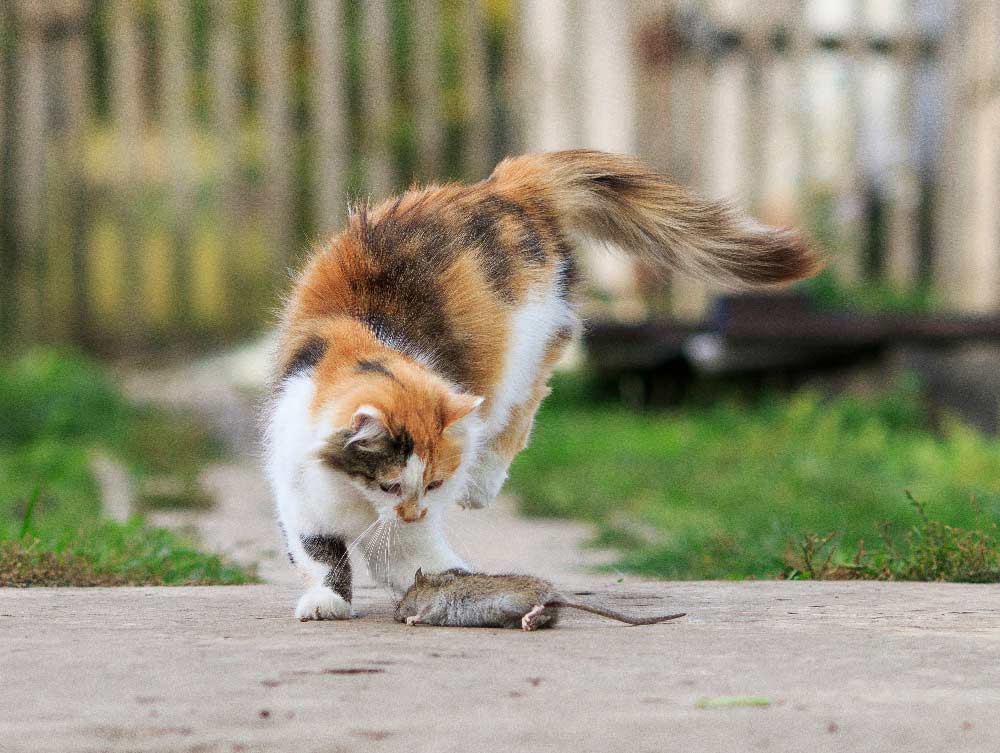
1. Cats
- Most house cats don’t consistently hunt or finish the job; “toying” can prolong suffering.
- Health risks to your cat from injured/poisoned rodents.
- Keeping cat food out can attract rodents.
2. Certain breeds of dogs
- Some breeds (terriers, dachshunds, German pinschers) were bred for ratting and can be effective.
- Modern pets aren’t working animals; injuries and disease exposure are risks.
- Store dog food securely to avoid inviting rodents.
3. Snakes
- Excellent hunters, but releasing a snake in a home is unsafe for family and pet.
- Rodents can injure the snake; welfare concerns for both animals.
4. Weasels and ferrets
- Agile and lethal to rodents, able to access tight spaces.
- High risk of injury during chases; should be fed pre-killed prey for safety.
5. Humans, in some cultures
- In certain Indian and Polynesian cultures, rat meat is traditional protein.
- Not a practical or appealing household solution for most people.
A reliable alternative
- Choose a rat trap that dispatches quickly and safely without risking pets.
- The Goodnature™ A24 Rat & Mouse Trap kills instantly and auto-resets—no supervision required.
- Toxin-free and pet-safe, delivering continuous, humane control.