


Why Do Rats Have Tails?
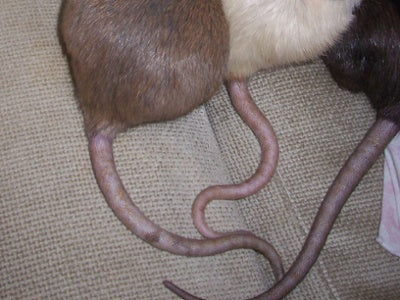
One of the rat’s most distinctive features is its long, hairless tail. This slimy-looking tail is one of the most common things people find disgusting about these pests. Although the tail itself is harmless, there are several ways a rat can harm you, so being repelled by rat tails isn’t entirely irrational.
The thought of a greasy rodent tail can make your skin crawl, but why do rats have tails in the first place? You might be surprised to learn a rat’s tail has more purposes than grossing out humans. Over thousands of years it’s evolved into a perfect accessory for survival.
Why Do Rats Have Tails?
At first glance a tail might seem like a liability—easy for predators to grab and vulnerable to injury. In reality, a rat’s tail has three key functions that help it survive: temperature regulation, balance, and predator evasion.
The tail is an excellent heat-loss organ. Rats can’t sweat, so they regulate temperature by controlling blood flow through the tail’s vessels. In heat, vessels dilate to dump warmth; in cold, they constrict to conserve it.
If you’ve seen a rat moving along a fence, cable, or wire, you’ve witnessed its superb balance—thanks to that long, agile tail. This acrobatic ability may be why conventional snap traps come up empty. A rat can “dine and dash” a baited snap trap, so consider using an automatic trap that humanely kills with a quick CO₂-powered strike.
A rat is a tasty snack for many predators. Tails can serve as decoys—encouraging a grab that injures the tail rather than the body, allowing escape. Even partial tail loss is survivable compared with body injury.
What Is the Structure of a Rat’s Tail?
Beneath the skin, the tail is complex: an extension of the vertebral column (caudal vertebrae) surrounded by tendons and covered by skin. Numerous arteries and veins run between tendons, making the tail sensitive to the environment and ideal for thermoregulation.
Why Is a Rat’s Tail So Long?
The average tail is nearly as long as the body—longer than many other rodents. A longer tail increases surface area for heat dissipation and can curl around the body for warmth. Tail length is partially influenced by climate during development. Length also aids climbing and balancing, and can act as a prop for extra reach when foraging.
Why Are Rat Tails Hairless?
Two main reasons: heat loss and grip. Without insulating fur, the tail sheds heat efficiently. The hairless texture also improves traction on surfaces—much like using bare hands instead of thick mittens when climbing.
Does Every Rat Have a Tail?
Most rats have tails, but rare genetic mutations can produce tailless individuals. These mutations often come with other abnormalities and poor survivability. Even if a tailless rat reaches adulthood, it struggles with thermoregulation and balance, making it more vulnerable to predators and accidents.
In domesticated breeds, some lines are bred hairless (for research or pet preferences). A tailless pet rat faces the same issues as a wild one and may require a temperature-controlled environment and safer enrichment (avoiding wheels/ropes that demand strong balance).
Outmaneuvering the Rat’s Tail With Automatic Traps
If a tail helps rats evade predators—and your traps—how do you handle a rat infestation? Use a humane system that removes the tail’s advantage. The A24 Automatic Trap attracts with long-life lure, then delivers a quick, humane CO₂ strike—no chance to grab and run like with a snap trap.
Automatic traps are chemical-free and environmentally responsible; each CO₂ canister can deliver up to 24 strikes. They’re easy to install and low-maintenance—outdoors, scavengers often remove carcasses for you. To finally rid your property of the pesky rat (and its tail), visit automatictrap.com to choose a better trap today.